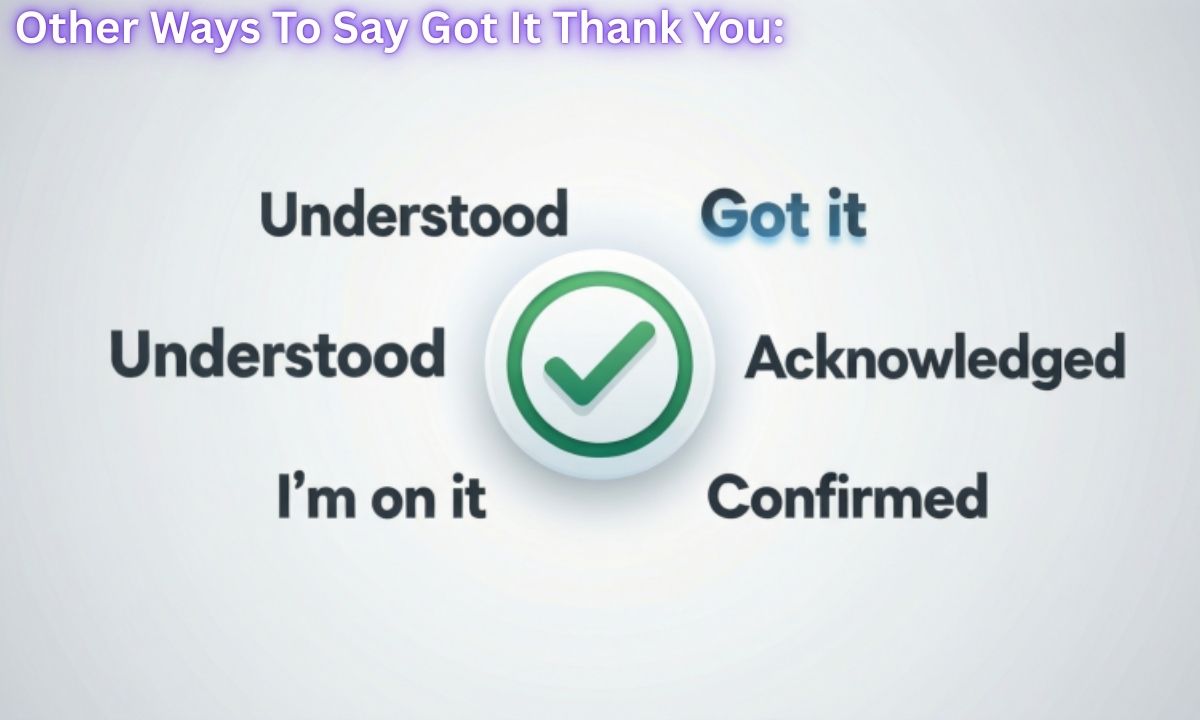
In professional and casual conversations, simply replying with “got it thanks” can feel repetitive or dull. Exploring Ways To Say “Got it Thank You” gives you fresh, polite alternatives that sound professional and thoughtful.
From learning how to say got it professionally in email, finding another word for got it thanks, to discovering alternatives to thank you in email, these phrases help you acknowledge messages clearly, politely, and make your communication more engaging.
1. Understood, Thank You
Definition:
“Understood, thank you” is a formal expression used to confirm that you have received, comprehended, and acknowledged the information shared.
Description:
This phrase communicates clarity and respect. It’s commonly used in professional settings like emails, meetings, or official instructions. Using “understood” assures the sender that you fully grasp their message, while “thank you” adds politeness and appreciation.
Usage Examples:
- “Understood, thank you for providing the detailed guidelines. I’ll follow them carefully.”
- “Your report and instructions are clear. Understood, thank you.”
- “Understood, thank you for clarifying the process. I’ll make sure everything is done on time.”
Read Also This: KMSL Meaning in Text: Instant Understanding of This Popular Text Acronym
2. Acknowledged, Thanks!
Definition:
“Acknowledged, thanks!” is a concise and professional way to confirm receipt and understanding of a message, while expressing gratitude.
Description:
This phrase is brief yet polite, suitable for workplace communication via emails, chat apps, or team collaboration tools. It signals that you have received the information and appreciate the sender’s effort. The tone is professional without being overly formal.
Usage Examples:
- “Acknowledged, thanks! I’ll update the document as you requested.”
- “Your instructions have been acknowledged, thanks for sending them over.”
- “Acknowledged, thanks! I’ll attend the meeting at the scheduled time.”
3. Noted, Appreciate It
Definition:
“Noted, appreciate it” is a professional acknowledgment that indicates the message has been understood, recorded, and valued.
Description:
This phrase is commonly used in corporate and structured environments. “Noted” shows attentiveness to details, while “appreciate it” conveys gratitude. It’s perfect for emails, official memos, or team communications where professionalism is key.
Usage Examples:
- “Noted, appreciate it. I will implement the changes immediately.”
- “Your instructions have been noted, appreciate it for the clarification.”
- “Noted, appreciate it! I’ll ensure the task is completed correctly.”
4. Copy That, Thanks!
Definition:
“Copy that, thanks!” is an informal or semi-formal way to confirm that you’ve received and understood a message, while expressing gratitude.
Description:
Originating from radio and military communication, this phrase is widely used in casual professional or team environments. It is friendly, short, and efficient, making it ideal for instant messaging, group chats, or quick email confirmations.
Usage Examples:
- “Copy that, thanks! I’ll send the report by end of day.”
- “Your instructions are clear, copy that, thanks.”
- “Copy that, thanks! I’ll follow the steps you outlined.”
5. Sounds Good, Thank You
Definition:
“Sounds good, thank you” is a friendly acknowledgment indicating agreement with the instructions or message, combined with gratitude.
Description:
This phrase is casual yet polite, often used in both personal and professional settings. It shows that you understand the message and are comfortable with the proposed plan or action. The tone is approachable and collaborative.
Usage Examples:
- “Sounds good, thank you! I’ll start working on the project immediately.”
- “Your suggested timeline sounds good, thank you for sharing it.”
- “Sounds good, thank you! I’ll confirm the details with the team.”
6. Will Do, Thanks
Definition:
“Will do, thanks” is a concise way to confirm that you will follow the instructions, while showing appreciation.
Description:
This phrase is casual and efficient, ideal for workplace chat messages, emails, or text communication. It assures the sender that you understand their request and will act on it promptly.
Usage Examples:
- “Will do, thanks! I’ll make the necessary updates right away.”
- “Your request is clear, will do, thanks for the clarification.”
- “Will do, thanks! I’ll complete the task before the deadline.”
7. All Set, Thank You!
Definition:
“All set, thank you!” is a confirmation that everything is prepared, understood, or ready to proceed, paired with gratitude.
Description:
This phrase conveys confidence and clarity. It’s commonly used after receiving instructions, updates, or confirmations. “All set” reassures the sender that no further clarification is needed.
Usage Examples:
- “All set, thank you! I’ve completed the preparations for the meeting.”
- “Your instructions are clear, all set, thank you!”
- “All set, thank you! I’ll follow the plan as discussed.”
Read Also This: WWA Meaning in Text: What It Means, Slang, and Social Media Use Explained
8. Message Received, Thanks
Definition:
“Message received, thanks” is a direct acknowledgment that a communication has been received and appreciated.
Description:
This phrase is simple and professional. It’s commonly used in emails, team chats, and instant messaging. It confirms receipt without adding unnecessary details and expresses gratitude.
Usage Examples:
- “Message received, thanks! I’ll review the document and respond shortly.”
- “Thanks, message received. I’ll make the updates as requested.”
- “Message received, thanks! I’ll coordinate with the team immediately.”
9. I Got It, Appreciate It
Definition:
“I got it, appreciate it” is a casual yet polite way to confirm understanding and express gratitude.
Description:
This phrase works in both personal and professional contexts. It emphasizes acknowledgment (“I got it”) while also appreciating the effort or clarity provided by the sender.
Usage Examples:
- “I got it, appreciate it! I’ll make the changes right away.”
- “Thanks for the guidance, I got it and appreciate it.”
- “I got it, appreciate it! Everything is clear now.”
10. That Makes Sense, Thank You
Definition:
“That makes sense, thank you” is an acknowledgment that shows comprehension and gratitude.
Description:
This phrase is particularly useful when instructions or explanations are given. It signals that you understand the reasoning or plan and that you value the clarification. It works well in professional or academic settings.
Usage Examples:
- “That makes sense, thank you! I’ll follow your approach.”
- “Thanks for explaining, that makes sense. I’ll proceed accordingly.”
- “That makes sense, thank you! Your guidance is very helpful.”
11. Thanks for the Info!
Definition:
“Thanks for the info!” is a casual and friendly way to acknowledge receipt of information and express gratitude.
Description:
This phrase is versatile and works well in both personal and professional contexts. It shows that you value the information provided and keeps the tone light and approachable.
Usage Examples:
- “Thanks for the info! I’ll update my notes accordingly.”
- “Got it, thanks for the info! This really helps.”
- “Thanks for the info! I appreciate you sharing the details.”
12. Noted with Thanks
Definition:
“Noted with thanks” is a professional expression used to indicate that the information has been recorded and appreciated.
Description:
This phrase is widely used in emails, official messages, or business communications. It is formal, concise, and polite, signaling that you have understood the message and value the sender’s input.
Usage Examples:
- “Your instructions have been noted with thanks. I’ll proceed accordingly.”
- “Noted with thanks! I’ll make sure the documents are updated.”
- “Noted with thanks. I appreciate the clarification provided.”
13. Appreciate the Update!
Definition:
“Appreciate the update!” is a friendly acknowledgment expressing gratitude for the information or progress shared.
Description:
This phrase is casual yet professional. It works well for emails, chat messages, or team communications. It not only confirms receipt but also emphasizes that you value the sender’s effort in keeping you informed.
Usage Examples:
- “Appreciate the update! I’ll review the changes immediately.”
- “Thanks, appreciate the update! It’s good to stay informed.”
- “Appreciate the update! I’ll adjust my schedule accordingly.”
14. I Understand, Thanks
Definition:
“I understand, thanks” confirms comprehension of the message while expressing gratitude.
Description:
This phrase is simple and polite. It can be used in professional settings, academic contexts, or casual conversations. It reassures the sender that you fully grasp the information provided.
Usage Examples:
- “I understand, thanks! I’ll follow the instructions carefully.”
- “Thanks, I understand. I’ll make the necessary adjustments.”
- “I understand, thanks! Your explanation clarified everything.”
15. Crystal Clear, Thank You!
Definition:
“Crystal clear, thank you!” is an enthusiastic way to confirm complete understanding and appreciation of the message.
Description:
This phrase conveys certainty and positivity. It’s perfect for both professional and casual use when instructions or information are especially clear and well-explained.
Usage Examples:
- “Crystal clear, thank you! I’ll implement the plan as discussed.”
- “Thanks for explaining, crystal clear! Everything makes sense now.”
- “Crystal clear, thank you! I appreciate your detailed guidance.”
16. I’ll Take Care of It, Thanks
Definition:
“I’ll take care of it, thanks” is a phrase confirming that you will handle a task or request while expressing gratitude.
Description:
This phrase is proactive and reassuring. It works well in professional emails, team chats, and personal communication, signaling responsibility and appreciation.
Usage Examples:
- “I’ll take care of it, thanks! You don’t need to worry.”
- “Thanks for letting me know, I’ll take care of it immediately.”
- “I’ll take care of it, thanks! I’ll update you once it’s done.”
17. Roger That, Appreciate It
Definition:
“Roger that, appreciate it” is an informal acknowledgment showing that you’ve received and understood instructions and are grateful.
Description:
This phrase originates from radio/military communication but is widely used in casual and semi-professional environments. It is friendly, concise, and conveys both acknowledgment and appreciation.
Usage Examples:
- “Roger that, appreciate it! I’ll get started right away.”
- “Your instructions are clear, Roger that, appreciate it.”
- “Roger that, appreciate it! I’ll follow the steps exactly.”
18. Makes Sense, Thanks!
Definition:
“Makes sense, thanks!” is a casual acknowledgment indicating that the information or instructions are clear and understandable, paired with gratitude.
Description:
This phrase is friendly and versatile. It works well in both professional and personal contexts. By saying “makes sense,” you confirm comprehension, while “thanks” adds a polite, appreciative touch.
Usage Examples:
- “Your explanation makes sense, thanks! I’ll follow the plan accordingly.”
- “Makes sense, thanks for clarifying the process.”
- “Thanks, makes sense! I’ll update the report as suggested.”
19. Duly Noted, Thank You
Definition:
“Duly noted, thank you” is a formal phrase used to indicate that the information has been carefully recorded and appreciated.
Description:
This is commonly used in professional, academic, or official communications. “Duly noted” emphasizes attention and precision, while “thank you” conveys politeness and acknowledgment of the sender’s effort.
Usage Examples:
- “Duly noted, thank you. I’ll proceed with the tasks accordingly.”
- “Your instructions have been duly noted, thank you for the clarification.”
- “Duly noted, thank you! I’ll make sure to follow the guidelines carefully.”
20. Appreciate the Clarification!
Definition:
“Appreciate the clarification!” expresses gratitude specifically for making information or instructions clearer.
Description:
This phrase is ideal when someone resolves confusion or provides additional details. It works well in professional emails, team chats, or academic settings. It acknowledges both understanding and the effort taken to clarify.
Usage Examples:
- “Appreciate the clarification! Now I understand the procedure fully.”
- “Thanks, appreciate the clarification. I’ll adjust my work accordingly.”
- “Appreciate the clarification! This really helped me avoid mistakes.”
21. Gotcha, Thanks a Lot
Definition:
“Gotcha, thanks a lot” is a casual, friendly acknowledgment that you’ve understood the message and are grateful.
Description:
This phrase is informal and conversational. “Gotcha” confirms understanding in a relaxed tone, while “thanks a lot” expresses sincere appreciation. It’s ideal for texting, instant messaging, or casual emails.
Usage Examples:
- “Gotcha, thanks a lot! I’ll complete the task today.”
- “Thanks a lot, gotcha! I understand what needs to be done.”
- “Gotcha, thanks a lot! I’ll coordinate with the team immediately.”
22. Thanks for the Heads-Up!
Definition:
“Thanks for the heads-up!” is a casual expression used to acknowledge and thank someone for providing advance information or warning.
Description:
This phrase is commonly used in informal professional or personal settings. It shows that you value the sender’s effort to keep you informed, particularly about upcoming events, changes, or potential issues.
Usage Examples:
- “Thanks for the heads-up! I’ll make sure to prepare accordingly.”
- “Appreciate the heads-up! I’ll adjust my schedule to accommodate it.”
- “Thanks for the heads-up! This will help me avoid any issues.”
23. Good to Know, Appreciate It
Definition:
“Good to know, appreciate it” is a friendly acknowledgment expressing that the information is useful and valued.
Description:
This phrase works well in professional and casual conversations. It communicates both comprehension and gratitude, highlighting that the information provided is relevant and helpful.
Usage Examples:
- “Good to know, appreciate it! I’ll keep that in mind.”
- “Thanks, good to know. I really appreciate it!”
- “Good to know, appreciate it! This will help me plan better.”
24. Thanks, I’ll Handle It
Definition:
“Thanks, I’ll handle it” is a phrase used to acknowledge instructions or requests while confirming that you will take responsibility for completing the task.
Description:
This phrase is professional yet approachable. It reassures the sender that you are taking charge, while “thanks” adds a polite note of appreciation. Ideal for emails, workplace chats, and casual professional communication.
Usage Examples:
- “Thanks, I’ll handle it! You don’t need to worry about this task.”
- “Got your instructions, thanks, I’ll handle it immediately.”
- “Thanks, I’ll handle it. I’ll update you once it’s completed.”
25. I’ve Got Everything I Need, Thanks
Definition:
“I’ve got everything I need, thanks” confirms that you have received sufficient information or resources and expresses gratitude.
Description:
This phrase is friendly and professional. It’s commonly used in emails, team chats, or after receiving guidance. It reassures the sender that no further input is required.
Usage Examples:
- “I’ve got everything I need, thanks! I can start the project now.”
- “Thanks! I’ve got everything I need to complete the task.”
- “I’ve got everything I need, thanks for your help.”
26. Loud and Clear, Thank You!
Definition:
“Loud and clear, thank you!” is a confident acknowledgment that the message has been received and fully understood, with gratitude.
Description:
This phrase originates from radio communication but is widely used in both professional and casual contexts. “Loud and clear” emphasizes clarity and comprehension, while “thank you” adds politeness. It’s energetic, positive, and reassuring.
Usage Examples:
- “Loud and clear, thank you! I’ll follow your instructions precisely.”
- “Thanks, loud and clear! I understand what needs to be done.”
- “Loud and clear, thank you! I’ll make sure the team is informed.”
27. Noted, Will Act on It
Definition:
“Noted, will act on it” confirms receipt of the message and indicates that you will take the required action.
Description:
This phrase is professional and proactive. It works well in emails, team chats, or workplace communication to reassure the sender that you’ve understood and will follow through.
Usage Examples:
- “Noted, will act on it. I’ll update you once it’s done.”
- “Thanks, noted! I’ll make the changes immediately.”
- “Noted, will act on it. I appreciate your guidance.”
28. Copy That, Will Do
Definition:
“Copy that, will do” is an informal acknowledgment indicating receipt of instructions and intention to carry them out.
Description:
This phrase is casual yet professional, originating from radio communication. It is concise, friendly, and perfect for instant messages, team chats, or quick email responses.
Usage Examples:
- “Copy that, will do! I’ll complete the task by EOD.”
- “Instructions received, copy that, will do.”
- “Copy that, will do. Thanks for letting me know.”
29. Got It Loud and Clear
Definition:
“Got it loud and clear” emphasizes full comprehension of the message or instructions.
Description:
This phrase is energetic and confident. It works in both casual and professional settings and conveys absolute clarity. Adding “thanks” at the end makes it polite and appreciative.
Usage Examples:
- “Got it loud and clear, thanks! I’ll start right away.”
- “Thanks, got it loud and clear. Everything is understood.”
- “Got it loud and clear! I appreciate the guidance.”
30. Understood, Will Do
Definition:
“Understood, will do” is a concise and professional way to acknowledge instructions and confirm that action will be taken.
Description:
This phrase is widely used in corporate emails, project updates, or team communication. It conveys comprehension and readiness to act.
Usage Examples:
- “Understood, will do! I’ll submit the report by tonight.”
- “Instructions are understood, will do as directed.”
- “Understood, will do. I appreciate your guidance.”
Other Ways to Say “Got It, Thank You” in Email
Definition:
This section focuses on email-friendly alternatives to “Got it, thank you” that are professional, polite, and clear.
Description:
Emails often require a more formal tone than casual chat messages. Using varied expressions avoids repetition and makes your communication more polished. You can choose from simple acknowledgments, professional confirmations, or appreciative phrases depending on context.
Examples:
- “Understood, thank you for the details.”
- “Noted with thanks. I’ll proceed accordingly.”
- “Acknowledged, thanks! I’ll make the necessary adjustments.”
- “I’ve received your message, thanks for the information.”
Got It, Thank You – Formal Alternatives
Definition:
Formal alternatives to “Got it, thank you” are polite expressions suitable for professional correspondence, business communication, or official contexts.
Description:
In formal communication, you want to convey acknowledgment, comprehension, and respect. Avoid casual phrasing and choose words that demonstrate professionalism and clarity.
Examples:
- “Duly noted, thank you for your instructions.”
- “Understood, thank you for providing the details.”
- “Acknowledged with thanks. I will follow up accordingly.”
- “Your message has been received, thank you for the information.”
How to Say “Got It” in a Professional Way
Definition:
This section highlights professional phrases that confirm comprehension of instructions or information without sounding casual.
Description:
Saying “Got it” professionally is important in workplaces, client communication, and official documentation. It assures the sender that you have understood while maintaining a polite and businesslike tone.
Examples:
- “Noted, I will act accordingly.”
- “Understood. I’ll ensure it’s completed as requested.”
- “Acknowledged. I’ll proceed based on your instructions.”
- “Message received and understood. Thank you for sharing.”
Read Also This: 30+ Best Alternative Ways To Say “I Hope You Are Feeling Better” for Any Moment
Another Word for “Got It, Thanks”
Definition:
This section provides synonyms or alternative phrases for “Got it, thanks” that convey the same meaning with variety.
Description:
Using synonyms prevents repetition and keeps communication fresh. Depending on the tone (formal, casual, or semi-formal), you can choose from a wide range of options that express acknowledgment and gratitude.
Examples:
- “Received, thank you.”
- “Noted with appreciation.”
- “Copy that, thanks!”
- “Understood, much appreciated.”
Conclusion:
Using different Ways To Say “Got it Thank You” makes your communication clear and polite. You must choose phrases that fit the situation. These alternatives keep messages fresh and professional, not boring or repetitive.
Learning Ways To Say “Got it Thank You” helps in emails, chats, or team communication. You must practice them often. They make you sound respectful, friendly, and confident. Using the right phrases improves understanding and shows you value the sender’s message.
Frequently Asked Questions
How do I say thank you professionally?
You can use formal phrases to acknowledge messages. Learning Ways To Say “Got it Thank You” helps you respond politely and professionally in emails or work communication.
What are other words for got it thanks?
There are many alternatives to express acknowledgment. Using Ways To Say “Got it Thank You” keeps your messages clear, polite, and avoids repeating got it thanks every time.
How can I acknowledge messages politely?
Polite acknowledgment improves communication. Using Ways To Say “Got it Thank You” shows respect and makes your replies professional, friendly, and easy to understand in emails or chats.
Can I use got it thanks in emails?
Yes, but it can feel casual. Using Ways To Say “Got it Thank You” in emails is better. They sound professional and maintain clarity and politeness.
What is a professional way to say got it?
Professional phrases express acknowledgment clearly. WaWays To Say “Got it Thank You” include options like understood, noted, acknowledged, or appreciate it to make emails sound professional.
How do I say got it in workplace chat?
Short, polite phrases are ideal for chatting. Using Ways To Say Got it Thank Ways To Say “Got it Thank You”helps confirm instructions while showing respect and appreciation in quick messages.
Are there alternatives to thank you in email?
Yes, many options exist. Learning Ways To Say “Got it Thank You” gives you alternatives to thank you in email, keeping messages professional, polite, and engaging.
How should I respond when someone gives instructions?
Acknowledgment is important. Using Ways To Say “Got it Thank You” shows that you understand the instructions and appreciate the sender, keeping communication clear and professional.
Why should I use different phrases for got it thanks?
Variety avoids repetition and sounds natural. Using Ways To Say “Got it Thank You” makes your emails and messages more polished, friendly, and professional.
Can I use got it thank you casually?
Yes, in casual messages it works. For work or professional communication, Ways To Say “Got it Thank You”offer better alternatives that sound polite and respectful.

Dome, creator of Meaningmint, turns everyday words into powerful meanings. His mission? Make knowledge refreshing, just like mint.