Texting has evolved into its own language full of acronyms and shortcuts. Understanding IDC Meaning in Text helps you interpret idc in chat, idc meaning in chat, and what idc means without confusion.
Many people get confused about the idc full form in chat, especially in casual conversations or social media. Learning IDC Meaning in Text ensures you respond correctly, maintain tone, and understand the sender’s intention in every chat message.
Definition & Meaning
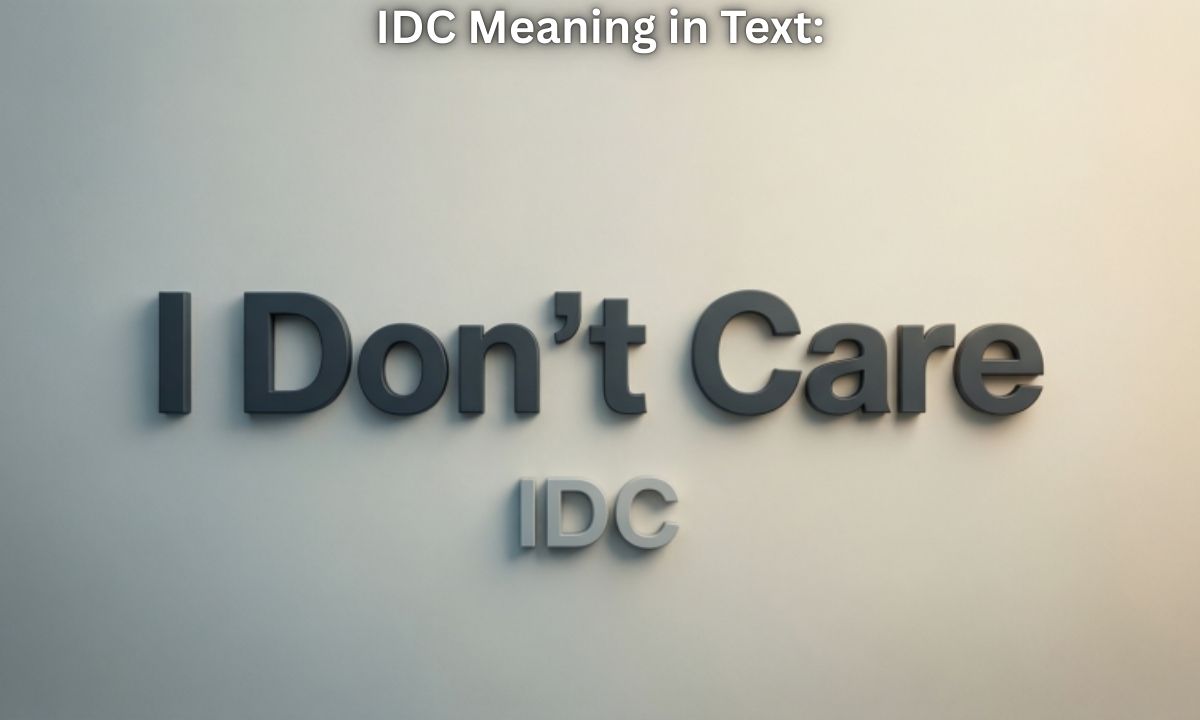
IDC stands for “I Don’t Care” and is commonly used in texting to show indifference or lack of preference. Its tone depends on context, ranging from casual to dismissive.
People often use IDC in chats, social media, or messaging apps to quickly express feelings. It can be friendly, neutral, or slightly rude, depending on how and to whom it’s said.
Read Also This: IHY Meaning in Text Explained Clearly: How and When to Use IHY
Background & History
IDC originated in the early days of online chatrooms, SMS texting, and instant messaging platforms like MSN and AOL. Shortcuts made typing faster and conversations simpler.
Over time, IDC spread to social media, memes, and everyday texting. Its use became common in casual digital communication, reflecting the fast, expressive language of the internet.
Usage in Various Contexts
Texting slang like IDC can change meaning depending on the context, tone, and relationship between people.
- Casual Conversations – Friends use IDC to show they are flexible or indifferent about small choices.
- Social Media Posts – People write IDC in captions to show confidence or disregard for opinions.
- Emotional Statements – IDC can indicate frustration, detachment, or someone giving up emotionally.
- Gaming Chats – Players use IDC to express lack of preference about maps or strategies.
- Professional Settings – IDC is usually avoided, as it may seem unprofessional or careless.
- Text Replies – Short, quick responses like IDC can save time but sometimes feel blunt.
- Memes & Pop Culture – IDC is popular in memes to convey bold, sarcastic, or relatable feelings.
Understanding how IDC works helps avoid misunderstandings and ensures your message matches your intended tone.
Common Misconceptions & Clarifications
Many people misunderstand IDC and assume it’s always rude or negative. Let’s clear up these common misconceptions.
- IDC is always rude – Not true. Tone and context determine whether it’s casual, neutral, or rude.
- IDC means anger – Sometimes it does, but often it just shows indifference or lack of preference.
- Only teens use IDC – Adults use it too, especially in casual texting or social media posts.
- IDC ends conversations – It may indicate disinterest, but it doesn’t always mean shutting someone out.
- IDC shows laziness – Not necessarily. People may use it to save time or keep texts brief.
- IDC is the same as IDK – IDC = I Don’t Care, while IDK = I Don’t Know.
- IDC should be avoided completely – It’s fine in casual conversations, just be careful with tone and audience.
Clarifying these misconceptions helps you use IDC confidently without accidentally hurting feelings or sounding rude.
Similar Terms & Alternatives
IDC isn’t the only acronym used to show indifference. Many similar terms or alternatives exist for casual texting.
- IDK – “I Don’t Know” – Shows uncertainty, not lack of care. Often confused with IDC.
- ICB – “I Can’t Be Bothered” – Stronger than IDC, expresses unwillingness or annoyance.
- NVM – “Never Mind” – Cancels or drops a topic, less dismissive than IDC.
- IDGAF – “I Don’t Give A F*”** – Very strong, blunt, and usually rude.
- Meh – A casual way to show indifference without words.
- Whatever – Common alternative, can be friendly or dismissive depending on tone.
- I’m Fine – Polite way to avoid sounding harsh, sometimes replaces IDC in sensitive situations.
Using these alternatives wisely helps convey your feelings without appearing rude or careless in different conversations.
How to Respond to This Term
Seeing IDC in a message can be confusing. How you respond depends on the tone and context of the conversation.
- Casual context – If a friend says IDC casually, reply with a simple suggestion or choice.
- Neutral tone – Use a friendly response like “Okay, your choice works for me” to keep conversation smooth.
- Dismissive tone – If IDC seems rude, stay calm and clarify feelings politely.
- Playful context – Respond with humor or sarcasm, keeping the chat lighthearted.
- Serious conversations – Avoid escalating conflict; ask politely if the person truly doesn’t care or is upset.
- Social media comments – Ignore if it’s casual, or engage only if necessary.
- Professional setting – Respond formally, ignoring the IDC phrasing, and provide constructive input instead.
Understanding the tone before responding helps avoid misunderstandings and keeps your conversation respectful and clear.
Regional or Cultural Differences
The meaning and tone of IDC can change depending on culture or region. Understanding these differences prevents misunderstandings in global communication.
- Western countries – IDC is often casual among friends, expressing flexibility or indifference.
- Asian countries – People may avoid using IDC directly, as it can seem rude or disrespectful.
- Middle Eastern countries – IDC may be interpreted as cold or dismissive, depending on the relationship.
- Teen vs adult usage – Teenagers use IDC frequently in casual chats; adults may use it more selectively.
- Online communities – IDC is common in forums, gaming chats, and social media worldwide.
- Professional culture – Many cultures view IDC as unprofessional, so softer alternatives are preferred.
- Humor and sarcasm – In some cultures, IDC is used jokingly, without negative intent.
Recognizing these cultural and regional nuances ensures IDC is interpreted as intended and prevents miscommunication.
Comparison with Similar Terms
IDC is often confused with other texting acronyms. Comparing it with similar terms helps avoid misunderstandings.
- IDC vs IDK – IDC = I Don’t Care; IDK = I Don’t Know. One shows indifference, the other uncertainty.
- IDC vs ICYMI – ICYMI = In Case You Missed It; completely unrelated, shows information sharing instead of care.
- IDC vs IC – IC = I See, acknowledges information; IDC shows lack of concern or preference.
- IDC vs ICB – ICB = I Can’t Be Bothered; stronger and more dismissive than IDC.
- IDC vs NVM – NVM = Never Mind, cancels a topic; IDC shows indifference but doesn’t cancel discussion.
- IDC vs IDGAF – IDGAF = I Don’t Give A F***; much harsher and rude than IDC.
- IDC vs Meh – Meh expresses casual indifference without words, softer and more playful than IDC.
Understanding these comparisons helps you choose the right acronym for tone, context, and audience.
Usage in Online Communities & Dating Apps
In online communities, IDC is often used to show indifference toward opinions, posts, or discussions. It helps users quickly express feelings without starting arguments or sharing lengthy responses.
On dating apps, IDC can indicate a casual approach or lack of preference. While it saves time, it may come across as disinterested, so tone and context matter to avoid misunderstandings.
Hidden or Offensive Meanings
While IDC usually means “I Don’t Care,” it can sometimes carry hidden or offensive undertones depending on tone and context.
- Dismissive attitude – IDC may imply someone doesn’t value your opinion, which can feel rude.
- Emotional withdrawal – Saying IDC can signal frustration, annoyance, or emotional detachment.
- Passive aggression – Repeated IDC usage in a conversation can subtly express anger or resentment.
- Sarcasm – IDC may be used sarcastically to mock or belittle someone’s concerns.
- Conflict escalation – In arguments, IDC can make situations worse if perceived as uncaring.
- Professional sensitivity – Using IDC in work communication can appear disrespectful or careless.
- Hidden judgment – Sometimes IDC disguises judgment or indifference while appearing neutral.
Being aware of these potential hidden meanings ensures you interpret IDC correctly and respond appropriately.
Suitability for Professional Communication
Using IDC in professional settings is usually not recommended. While it’s common in casual chats, in work emails or messages it can seem careless, dismissive, or unprofessional to colleagues and clients.
- It may come across as rude or indifferent.
- Can create misunderstandings about priorities or interest.
- Often reduces credibility in formal communication.
- Better to use polite alternatives like “I’m flexible” or “Either option works.”
- Suitable only in very casual, informal workplace chats with close teammates.
IDC in Different Social Media Platforms
IDC is widely used across social media, but its tone can vary depending on the platform. Understanding these differences helps you avoid misunderstandings and stay relatable.
- On Instagram, IDC is often used in captions to show confidence or independence.
- On Twitter/X, it can be used sarcastically or to dismiss opinions in threads.
- On TikTok, IDC appears in text overlays, usually for humor or attitude.
- On Facebook, it’s less common but can show casual indifference among friends.
- In messaging apps like WhatsApp or Messenger, IDC is used to save time or express flexibility.
Being aware of platform-specific usage ensures your IDC messages are interpreted correctly.
Read Also This: HBS Meaning in Text: Complete Guide for Chat Users
Tips for Using IDC Correctly
Using IDC properly makes your conversation clear without offending anyone. Here are some tips to follow:
- Consider the tone of the conversation before using IDC.
- Use IDC only with friends or casual contacts, avoid it in professional messages.
- Pair IDC with context or explanation to prevent sounding rude.
- Avoid using IDC repeatedly, as it may appear dismissive or cold.
- Use softer alternatives like “I’m okay with anything” if unsure of the recipient’s reaction.
Following these tips helps you use IDC naturally, keeping your messages casual but respectful.
Frequently Asked Questions
What does IDC mean in text?
IDC Meaning in Text stands for “I Don’t Care.” It shows indifference in conversations. Knowing IDC Meaning in Text helps you understand casual chats clearly.
What IDC means?
IDC Meaning in Text means a person doesn’t have a preference or opinion. Understanding what IDC means helps interpret idc in chat correctly every time.
Is IDC always rude in texts?
IDC Meaning in Text is not always rude. Tone matters. IDC in chat can be neutral, casual, or dismissive depending on context and relationship.
What is the full form of IDC in chat?
The idc full form in chat is “I Don’t Care.” IDC Meaning in Text explains casual, indifferent, or flexible responses in texting and social media.
How is IDC used in messages?
IDC Meaning in Text is used to show indifference, no preference, or casual attitude. IDC in chat saves time and expresses feelings quickly.
Can IDC be friendly or casual?
Yes. IDC Meaning in Text can be friendly or casual. IDC in chat often shows flexibility, joking tone, or relaxed conversation among friends.
Should I use IDC in professional chats?
It’s not recommended. IDC Meaning in Text can seem unprofessional. In professional chats, avoid IDC in chat and use polite alternatives instead.
How do I respond to IDC in chat?
Respond politely depending on tone. IDC Meaning in Text can be casual, neutral, or rude, so understanding idc in chat ensures smooth conversation.
Conclusion
Understanding IDC Meaning in Text is very helpful for texting and online chats. Many people use idc in chat daily. Knowing idc full form in chat clarifies the meaning and intent behind messages.
IDC Meaning in Text shows how people express feelings casually. When someone types idc meaning in chat, it can be neutral, friendly, or dismissive. Knowing idc means different things helps you respond politely and communicate clearly in every conversation.

Dome, creator of Meaningmint, turns everyday words into powerful meanings. His mission? Make knowledge refreshing, just like mint.